
How to Choose Vinyl Flooring
Vinyl plank flooring stops being confusing once you know the five decisions that actually matter: thickness, wear layer, waterproofing, installation method and format. This guide walks through each one in plain language.
Reviewed by Clem, flooring specialist, 30+ years in vinyl flooring. Last updated 17 August 2026.
- 100%
- WaterproofWet areas, kitchens, living
- 1.5m
- Max plank lengthStays stable when glued
- 0
- Expansion gapsNeeded once bonded
- 30+
- Years of experienceBehind the advice you get
Start With the Room, Not the Plank
Before you compare products, be honest about what the floor has to survive. Kids and pets grind grit into a surface every day. A west-facing living room cops hours of hot Queensland sun. A rental refresh has a different budget to a forever-home renovation. Write down the rooms, what happens in them, and roughly how many square metres you need. Every decision below gets easier with that list in front of you.
One thing you can park early: looks. Wood-look vinyl has become genuinely convincing across every price point, so you are not choosing between attractive and affordable. You are choosing between specifications, and those are much easier to compare.
Thickness: 2.5mm vs 4.5mm
Thicker is not automatically better, it is different. Our ArtiFloor Timberland range comes in 2.5mm and 4.5mm versions, and the right one depends on the room and the budget, not on a bigger number winning.
| What you notice | 2.5mm planks | 4.5mm planks |
|---|---|---|
| Feel underfoot | Firm and close to the subfloor | More body, a touch more cushion |
| Sound | A little livelier, depends heavily on the subfloor | Quieter, the extra body soaks up footfall |
| Subfloor forgiveness | Telegraphs imperfections sooner, wants careful prep | Slightly more forgiving, though good prep still matters |
| Door clearance | Lower profile, handy in renovations with tight doors | Sits higher, check clearances before ordering |
| Cost logic | Less material, usually the lower price of the two | More material, usually priced above the 2.5mm |
| Typical pick | Rentals, budget renovations, low-clearance rooms | Family living areas and bedrooms where quiet matters |
Wear Layer: The Spec That Earns Its Keep
The wear layer is the clear coating on top of the printed decor, and it is what actually stands between your floor and claws, chair legs and grit. It is measured in fractions of a millimetre, and as a rule the thicker it is, the longer the plank keeps looking new in a busy room.
We deliberately do not print wear layer figures in this guide, because they vary decor by decor and we would rather you have the exact number than a rounded one. If the wear layer matters to your decision, and in a hallway or a home with a big dog it should, check the product page for the decor you like or ask us to confirm the spec before you order.
Waterproof, With One Caveat
Vinyl planks are waterproof as a material. PVC does not swell or blister the way wood-based boards do, which is why vinyl handles Brisbane humidity, steamy bathrooms and the odd kitchen flood far better than laminate. The caveat: a waterproof plank is not automatically a waterproof floor. Water can still find joins and edges and reach the subfloor underneath, so wet-area performance also depends on how well the floor is detailed and sealed at installation. If wet areas are your main concern, read our vinyl vs laminate comparison next.
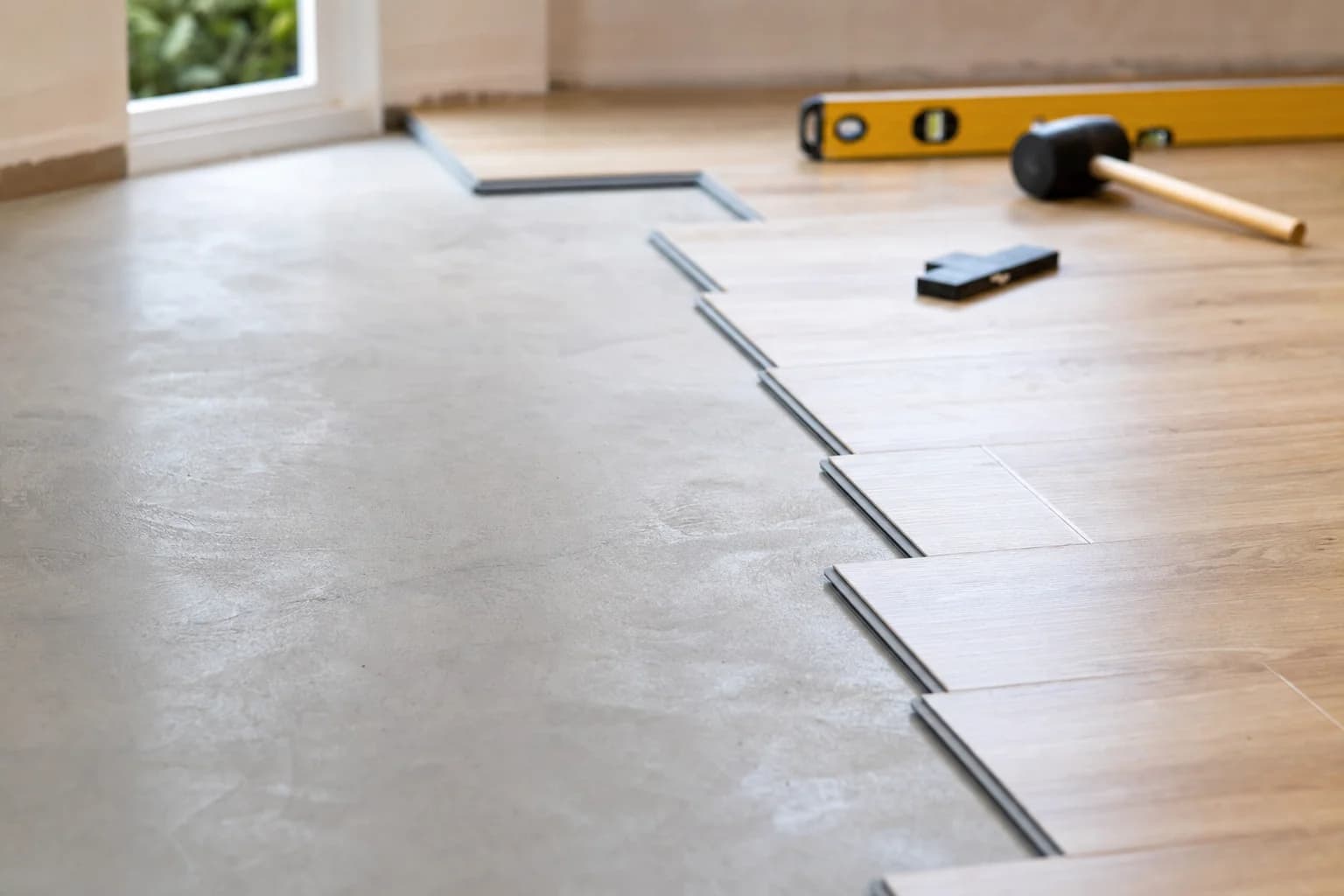
The subfloor mistake that ruins a vinyl install
Yellow tongue, red tongue and other chipboard style subfloors are made from reconstituted sawdust. Adhesive bonds to those tiny particles, and over time they pull free under stress. Always install a hard overlay, plywood or masonite, before laying vinyl plank flooring. Your installer needs to assess this before any product is ordered.
A sound, level subfloor is the single biggest factor in a vinyl install that lasts. Any lump, dip or contour underneath will eventually show through the plank.
Laying Over an Existing Floor
Over tiles
Possible, but the grout lines must be filled and the surface levelled, or they telegraph through the vinyl over time.
Over floating timber or laminate
Remove it first. You cannot bond a glue down floor to something that floats and needs to breathe.
Over structural timber
Workable if the floor can still breathe from below, though it is worth asking why you are covering it.
Glue-Down or Click-Lock
Glue-down
Planks are adhered directly to the subfloor. The result sits low, feels rock solid and copes well with large rooms and hot sun, because nothing is floating or moving. The trade-off is that it demands a flat, dry, properly prepared subfloor and is really a job for a professional installer.
Click-lock
Planks lock into each other and float over the subfloor. Installation is faster and friendlier to a capable DIYer, and the floor can be lifted later if needed. Floating floors need an expansion gap at the edges and still reward decent subfloor prep.
The method depends on the product, so if you are set on one approach, confirm it against the range you like before ordering. Ask us and we will tell you straight. Our installation guide covers both methods in detail.
How Vinyl Behaves in the Brisbane Sun
In a bright Brisbane room with big windows, the thing to watch is colour change, not warping. Modern planks of 1.5m or less, glued down, do not warp. That plank length limit is not a marketing number: the industry settled on it because longer boards cannot be held reliably by adhesive, and every range on this site complies.
Colour change from intense, constant sun affects every synthetic floor: vinyl, hybrid and laminate alike. The fix is simple and it sits with you as the owner. Use blinds, curtains or UV window film to keep the harshest sun off the floor. Supplier warranties expect window coverings in direct-sun rooms, so it is worth doing anyway.
Herringbone or Straight Plank
Format is a taste call with practical consequences. Straight planks are calm, make small rooms feel longer, and are quicker for an installer to lay. Herringbone gives you a parquet look with real character, and our ArtiFloor Premium Herringbone LVT delivers it in a waterproof plank. Just know that the pattern means more cuts and more labour, so expect installers to quote herringbone above a straight lay of the same area.
If you want a straight plank instead, compare the Timberland 2.5, Timberland 4.5 and Terra Mater Resiplank Essence ranges side by side. And once you have a shortlist, our cost guide shows current per square metre pricing so you can sanity-check the budget.
Order samples before anything else
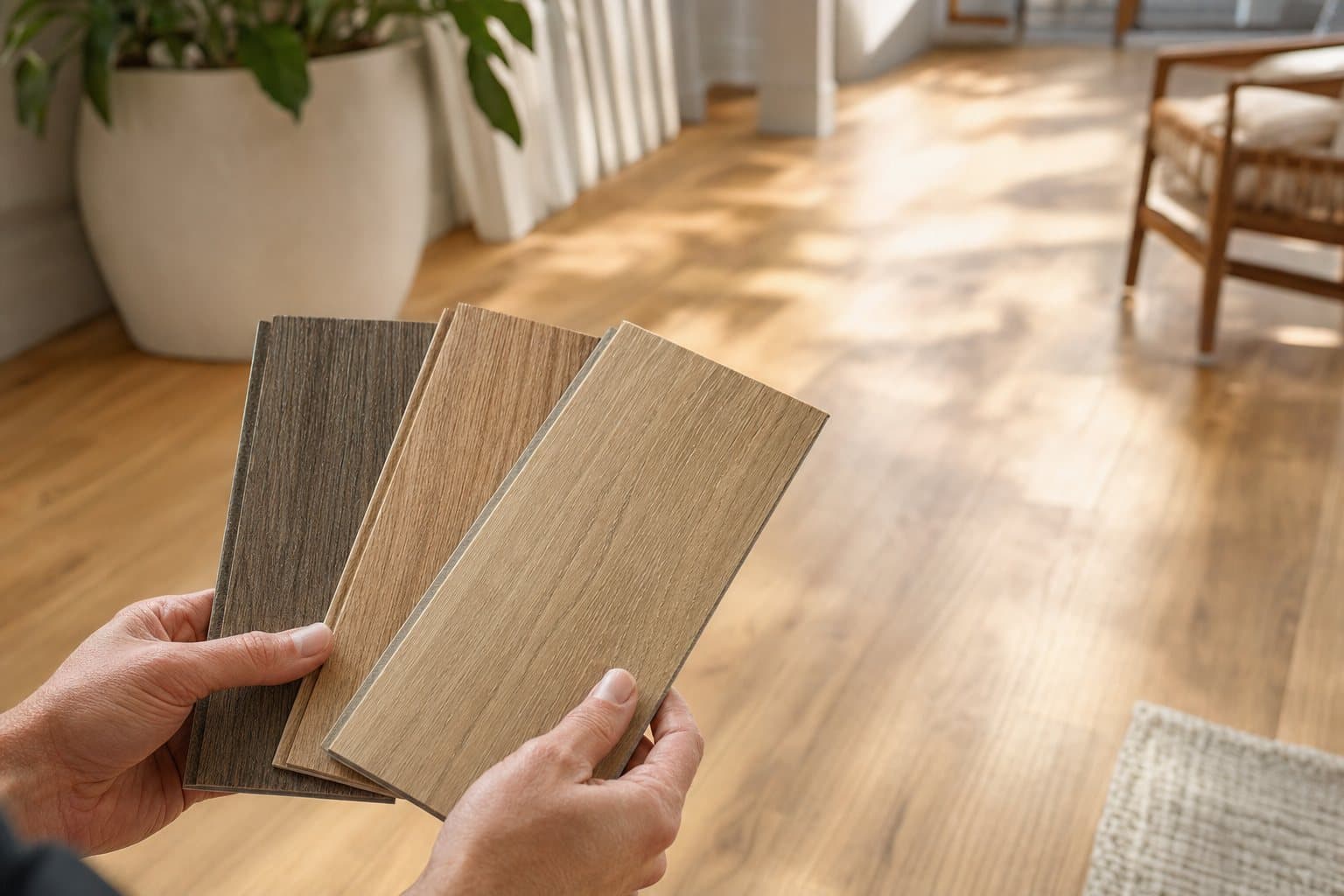
Every regret we hear about flooring starts with someone choosing from a screen. A sample in your hand answers four questions no website can.
- Colour in your lightBrisbane sun through a north-facing window changes a plank completely. Look at the sample morning and evening before you decide.
- Texture underhandPhotos flatten the embossing. Run your hand over the sample and decide whether the grain texture feels right, not just looks right.
- Against your joineryHold the sample against skirting boards, door frames, benchtops and cabinets. A plank that clashes with the kitchen is a daily annoyance.
- Side by sideTwo or three contenders next to each other settle debates faster than any website. Most shortlists collapse to one within a day.
The marketing labels to ignore
The flooring trade loves a fear based label. You will see products shouting silica free or VOC zero, designed to make you doubt the one next to it, often when both were made side by side in the same factory.
It is far cheaper for a supplier to make a safe product than to settle a single lawsuit. Reputable modern flooring is safe. The fear labels are a sales tactic, not a safety feature.
Why Take Our Word for It
The advice here is led by Clem, a flooring specialist with 30+ years in vinyl flooring. He was working with vinyl plank when it first landed in Australia and has seen every change since.
We make our money on getting you into the right floor, not on a bigger installation bill, because we do not install. Order a few samples, see them in your own light, and decide from there.
Common questions, answered in one line each
When should you choose vinyl over hybrid?
Vinyl plank flooring shines in large areas and high traffic spaces where you do not want expansion gaps, and anywhere a rock solid glued down floor matters. For some homes a hybrid or a laminate is the better call, which is exactly why a straight recommendation beats a one size fits all pitch.
Does vinyl plank flooring fade or warp in the sun?
Warping is not an issue with modern planks of 1.5m or less, glued down. The real risk from intense sun is colour change over time, which is true of every synthetic floor. Use window coverings to protect any floor from constant direct sun.
Can you lay vinyl over tiles or floorboards?
Over tiles, yes, but the surface must be prepped and levelled or the grout lines telegraph through. Over floating timber or laminate, no, you remove it first. A structural timber floor that can breathe from below is a different story. Never glue straight onto chipboard.
Shortlist Made? Get It in Your Hands
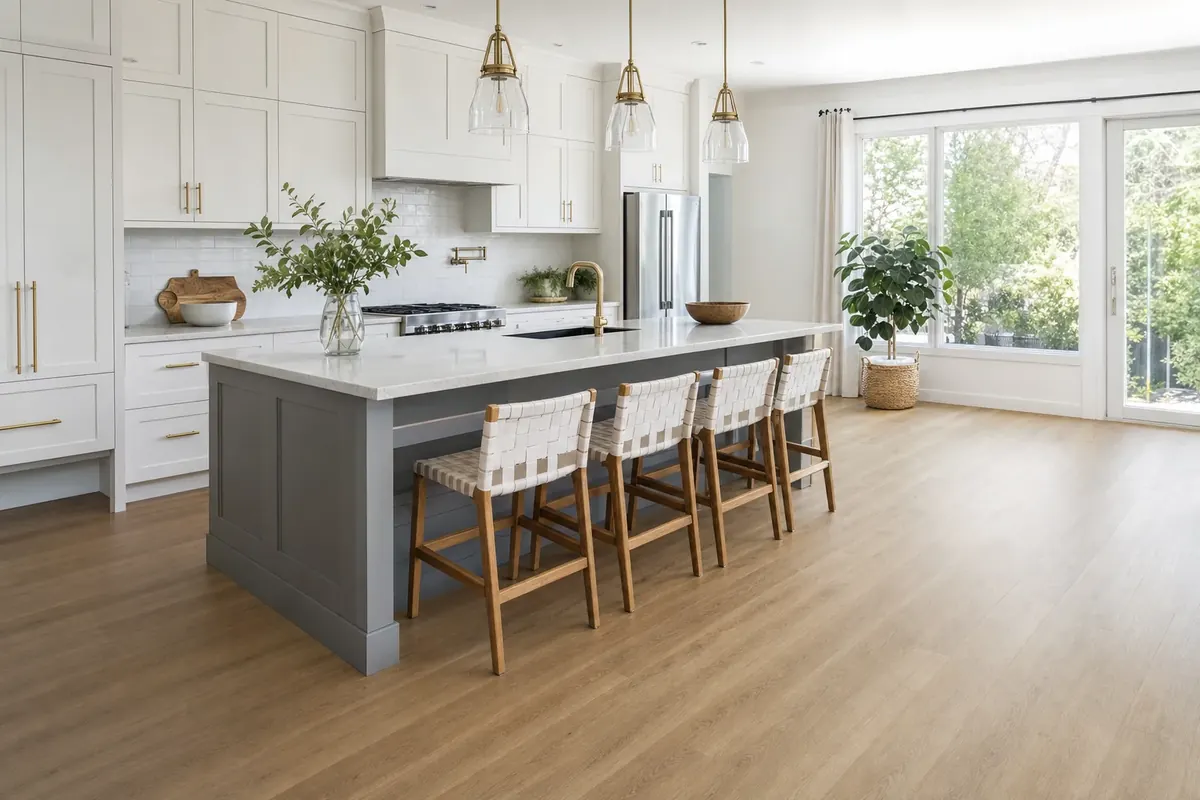
Pick your two or three favourite decors and see them in your own rooms before you spend real money. Samples are 1 for $15, 2 for $20 or 3 for $25, redeemable against your flooring order.