
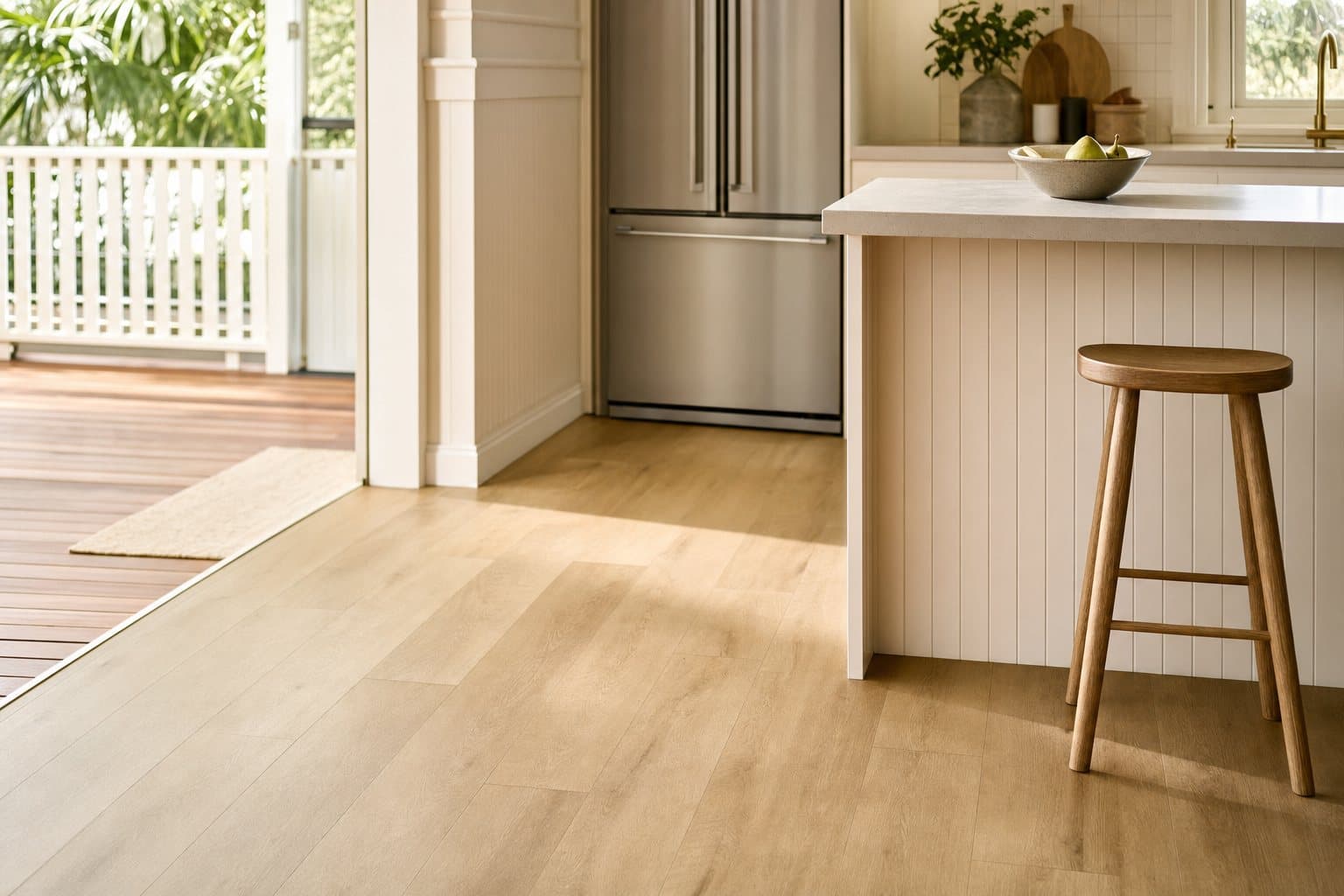
Vinyl Plank Flooring in Bathrooms: The Honest Answer
Yes, vinyl plank works in most bathrooms, and it handles water better than any other wood-look floor. But waterproof on the box does not make the whole floor waterproof. Here is where the risk actually sits, and when tile is still the right call.
In this article
Yes, you can lay vinyl plank flooring in a bathroom. It copes with splashes, steam and wet towels better than any other wood-look floor, and for most Brisbane bathrooms it is a sound choice. But that short answer sounds like a sales pitch, and the word waterproof gets used loosely enough in flooring marketing that it is worth pulling apart before you spend money on it. So here is the long answer, including the situations where we would tell you to use tile instead.
What Waterproof Actually Means
Vinyl plank flooring is PVC through its whole body. Water cannot soak into it, swell it or split it, the way moisture destroys laminate cores and engineered timber. Leave a puddle sitting on a vinyl plank overnight and in the morning you wipe it up, dry the spot and move on. The plank itself does not care.
That is a claim about the material, and it is true. The catch is that a floor is more than its material.
The Plank Is Waterproof. The Floor Underneath Is Not.
A finished vinyl floor is hundreds of planks with joins between them, ending at walls, a vanity, a shower screen and a doorway. Splashes and mopping sit harmlessly on the surface. Standing water, given enough time, can work through joins and around the perimeter to whatever sits below: a timber subfloor, particleboard sheeting, or the slab. Vinyl protects itself. It does not automatically protect the structure under it.
In practice, a bathroom vinyl floor is only as good as its detailing. Silicone at the perimeter, proper trims at the doorway and shower, and a subfloor that was sound and dry before the first plank went down. A well-detailed glue-down floor gives water almost no path underneath. A carelessly finished one leaves the back door open.
The plank is the last thing that will fail in a wet bathroom. Worry about the edges, the silicone and the subfloor instead.
One more thing on this. Bathrooms in Australian homes are wet areas with waterproofing requirements under the building code, met by a membrane system beneath the floor finish. Vinyl sits on top of that system as a finish; it is not a substitute for it. If you are renovating, your builder or certifier can confirm exactly what your bathroom needs underneath. We sell flooring, and we would rather say that plainly than let anyone believe a waterproof plank replaces waterproofing.
Where Vinyl Wins Over Laminate
Water-resistant laminates have improved, and modern ones cope with splashes far better than the laminate of fifteen years ago. But laminate is built on a timber-based core, and that core is the weakness. When water finds a join or a cut edge under the vanity, the core swells, the surface ridges, and the damage is permanent. You do not dry out swollen laminate; you replace it.
Vinyl has no timber in it to swell. Water on top gets wiped up. Even water that reaches a join has nothing inside the plank to attack. For bathrooms, laundries and kitchens, that single difference settles the argument in vinyl's favour. If you are weighing the two materials across a whole house, our vinyl vs laminate guide covers durability, feel and cost as well.
Glue-Down Suits Bathrooms Best
Vinyl plank flooring is installed either glued to the subfloor or clicked together as a floating floor. In a wet area we lean glue-down every time. A glued plank is bonded across its whole back, so there is no floating layer beneath the floor for water to travel along, and the perimeter can be sealed neatly with silicone. Movement is minimal, edges stay flat in steamy conditions, and if a plank is ever damaged it can be lifted and replaced on its own.
Click vinyl can work in a bathroom too, and plenty of it has been laid in Brisbane units where a floating floor was the practical option. It just demands more care at the wet edges, and the standard of the installer matters even more.
When We Would Say No
There are bathrooms where we would not put our own product, and it is worth being upfront about them.
- Open showers and wet rooms, where the floor itself cops running water daily. That is tile over a membrane, full stop.
- Around a freestanding bath that gets heavy family use. Constant overflow and splash pooling at plank joins is asking a lot, forever. Tile handles it without thinking.
- Over a subfloor with an existing moisture problem. Vinyl will hide it while it gets worse. Fix the moisture first, then talk flooring.
- Anywhere the fall of the floor sends water to a drain across the vinyl. Floor wastes and vinyl plank are an awkward pairing; that design wants tile.
For an ordinary family bathroom, a powder room, an ensuite with a screened shower or a laundry, none of those apply, and vinyl plank flooring is a comfortable, quiet, warm-underfoot choice that matches the floor through the rest of the house.
Getting It Right in a Brisbane Bathroom
If you go ahead, the difference between a floor that lasts and one that causes grief comes down to a short list of details, all of them decided on installation day.
- Start with a subfloor that is flat, sound and dry, with any old adhesive or sheet flooring dealt with properly.
- Choose glue-down in preference to click for wet rooms wherever the job allows it.
- Seal the perimeter and every fixed penetration with a quality wet-area silicone.
- Use proper trims at the doorway and shower screen rather than leaving raw edges.
- Wipe up standing water when you see it. Not because the plank minds, but because the joins should not be tested daily.
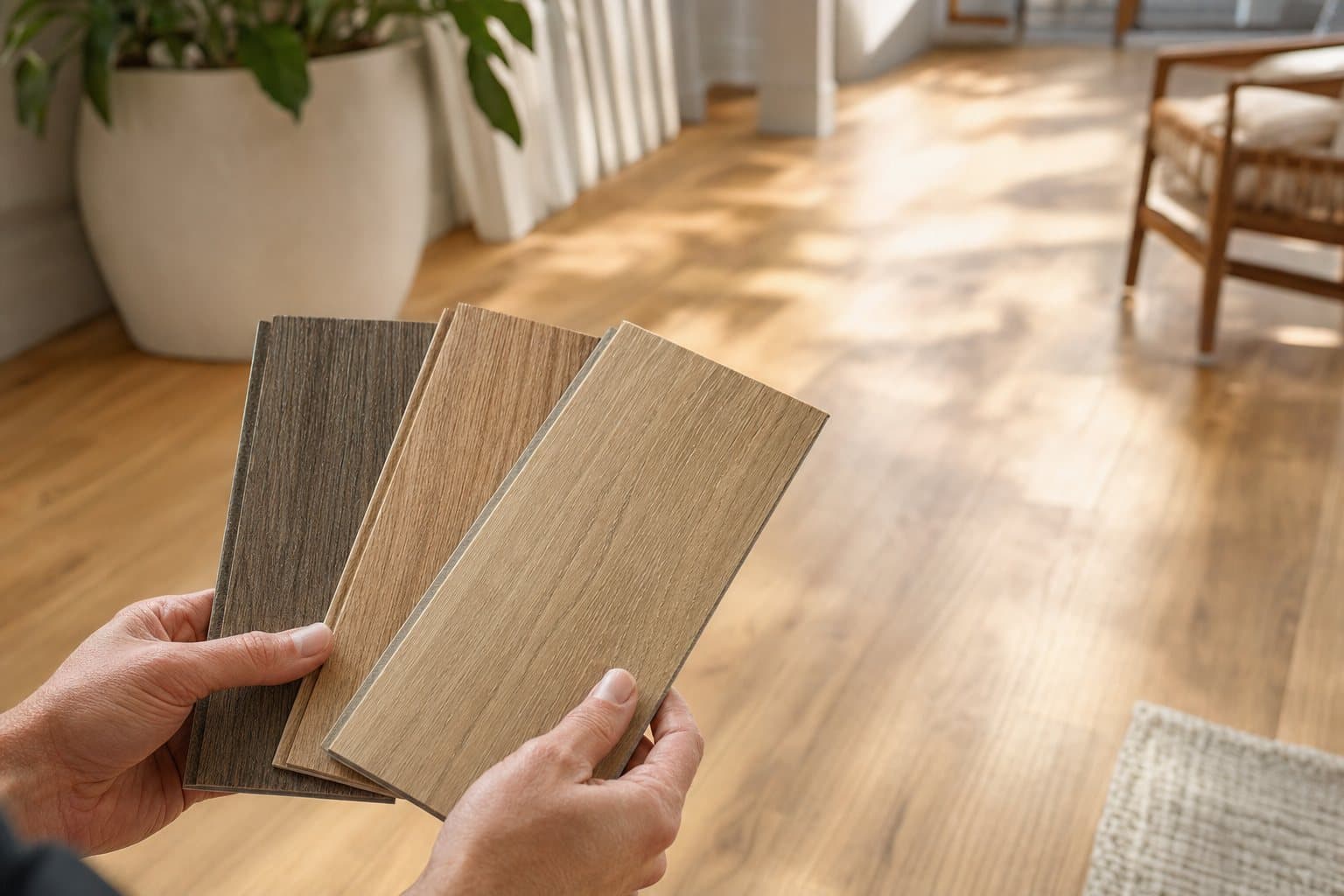
One last note on the trade side. For wet areas in particular, use an installer who does vinyl regularly and ask them directly how they handle perimeter sealing. Our installation guide explains what good looks like, so you can brief whoever you hire with confidence.
Read enough? Hold the floor instead
No article settles a colour decision. Samples are 1 for $15, 2 for $20 or 3 for $25, redeemable against your flooring order, delivered to your door so you can judge the decor in your own light.