
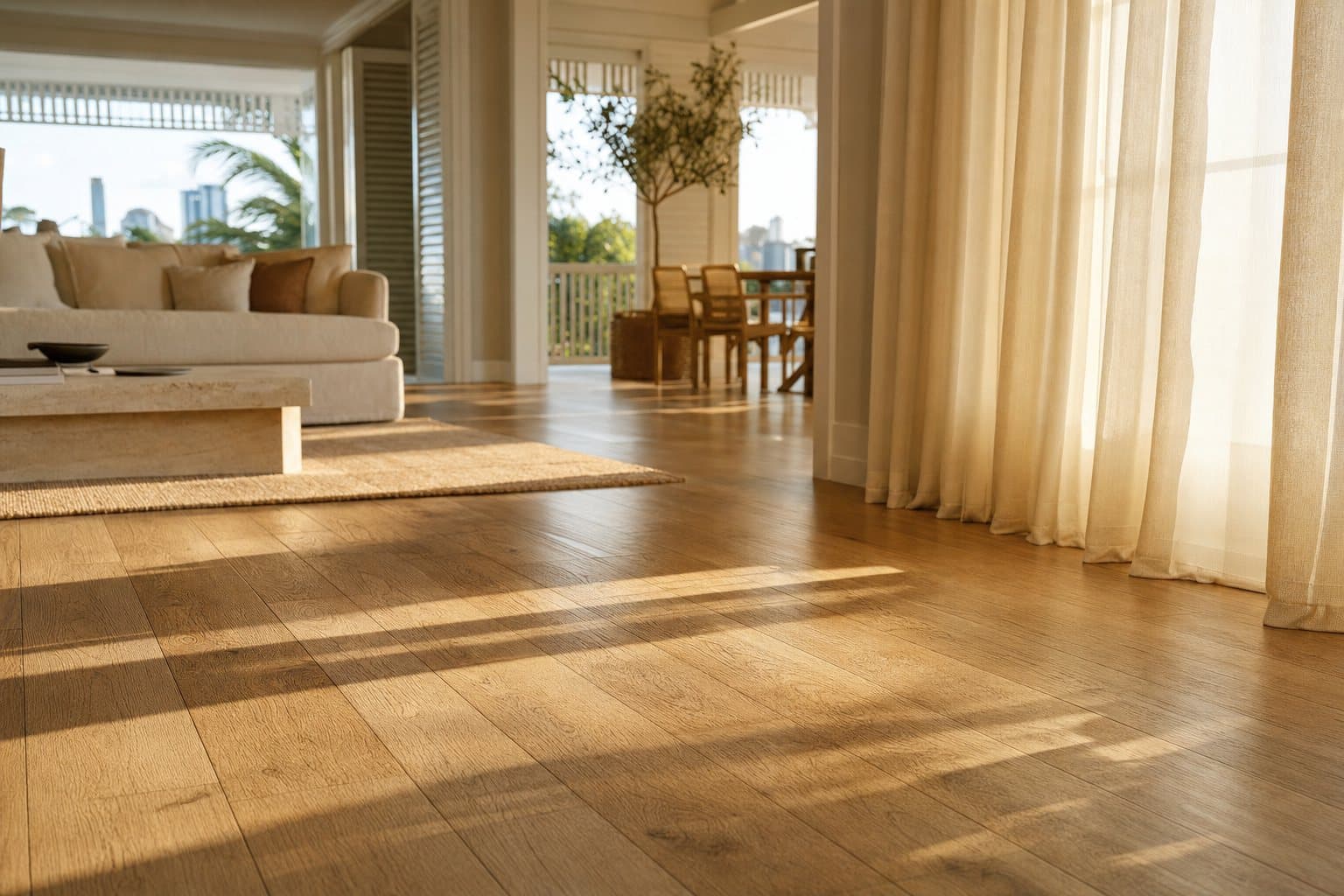
How to Clean Vinyl Plank Floors
Vinyl plank is one of the easiest floors to keep clean, which is exactly why people overcomplicate it. A broom, a damp mop and a pH-neutral cleaner cover almost everything. The short list of things you should never use matters more than the routine.
In this article
Here is the entire cleaning kit a vinyl plank floor needs: a soft broom or vacuum, a flat microfibre mop, and a pH-neutral floor cleaner diluted in water. That is it. No polish, no steam, no scrubbing machine, no miracle spray. Most of the damaged vinyl floors we hear about were not neglected; they were cleaned with the wrong thing, enthusiastically.
If your floor is hybrid rather than vinyl, keep reading anyway. Hybrid's surface is the same family of material, a vinyl wear layer over a rigid core, so the routine, the cleaner and the list of things to avoid are the same.
The Routine That Actually Matters
Dry cleaning does most of the work. Grit walked in on shoes acts like sandpaper under foot traffic, and in Brisbane, between sandy shoes, jacaranda litter and whatever the dog brings in, grit is the main thing standing between your floor and a long life. Sweep or vacuum the busy areas every couple of days, more often if you are near the water or have kids in football boots.
Then, somewhere between weekly and fortnightly depending on traffic, damp mop. The word damp is doing real work in that sentence. Wring the mop until it stops dripping; you want a film of moisture that flashes off in a minute or two, not puddles working into the joins. Vinyl planks are waterproof as a material, but there is no reason to make the joins prove it every week.
| Task | How often | With what |
|---|---|---|
| Sweep or vacuum traffic areas | Every 2 to 3 days | Soft broom, or vacuum with the beater bar off |
| Damp mop | Weekly to fortnightly | Microfibre mop, pH-neutral cleaner, well wrung |
| Spot-clean spills and marks | As they happen | Damp cloth first, diluted neutral cleaner if needed |
| Check felt pads and mats | Every few months | Replace worn pads, shake out doormats |
The Best Cleaner Is a Boring One
People go looking for the best cleaner for vinyl plank flooring expecting a specific bottle. The honest answer is a category, not a brand: any cleaner labelled pH-neutral and safe for vinyl or hybrid floors, diluted to the maker's ratio. Supermarket versions and flooring-shop versions both do the job. What you are paying for in either case is a detergent gentle enough to lift grime without attacking the polyurethane wear layer that protects the print film.
Two kitchen-cupboard standbys deserve a mention because they come up constantly. Vinegar: fine occasionally, well diluted, if you like the streak-free result, but it is mildly acidic and there is no need for it when a neutral cleaner exists. Methylated spirits: useful in small quantities on a cloth for scuffs and sticky residue, not as a mopping solution.
If the label promises shine, gloss or polish, it does not belong on a vinyl floor. Shine in a bottle is a film, and films build up, smear and yellow.
What Never to Use
This list is short, and every item on it comes from floors we have seen ruined.
- Steam mops. The heat can soften adhesive, stress the wear layer and drive moisture into joins. Most flooring manufacturers void their warranty over steam. It is the single most common way a good vinyl floor gets wrecked.
- Wax, polish and gloss restorers. They leave a film that dulls, streaks and attracts dirt, and stripping it back off is a miserable job.
- Abrasives: scouring powder, steel wool, the green side of the kitchen sponge. They scratch the wear layer permanently.
- Harsh chemistry: bleach, ammonia, solvent cleaners and anything for ovens or drains. These can discolour or attack the surface.
- Soaking-wet mopping. Not because one wet mop destroys the floor, but because a weekly flood is an unnecessary habit with no upside.
Scuffs, Stains and Mystery Marks
Most marks come off with a damp cloth and patience. Black heel scuffs usually rub away with a dry microfibre cloth or a standard white eraser. For sunscreen, which is a real one in Queensland because some formulations stain vinyl if left sitting, wipe it up promptly rather than letting it dwell on the floor near the back door all summer. Food, mud and general spills want a damp cloth as they happen; dried spills want a few minutes under a wet cloth before wiping rather than scrubbing.
For anything stubborn, work up the ladder slowly: dry cloth, damp cloth, diluted neutral cleaner, a dab of methylated spirits on a cloth. Stop at the first rung that works. Do not jump straight to something aggressive because the mark is annoying.
Brisbane Notes: Grit, Humidity and Sun
Three local realities are worth building into the routine. First, grit, already mentioned, because it is the big one: a decent doormat at every external door removes most of it before it reaches the floor, and doormats are the cheapest floor protection you can buy.
Second, humidity. A Brisbane summer will slow the drying of a mopped floor, which is one more reason the mop should be wrung hard. On a sticky February day, run the fan or open the room after mopping so the surface dries in minutes rather than sitting damp.
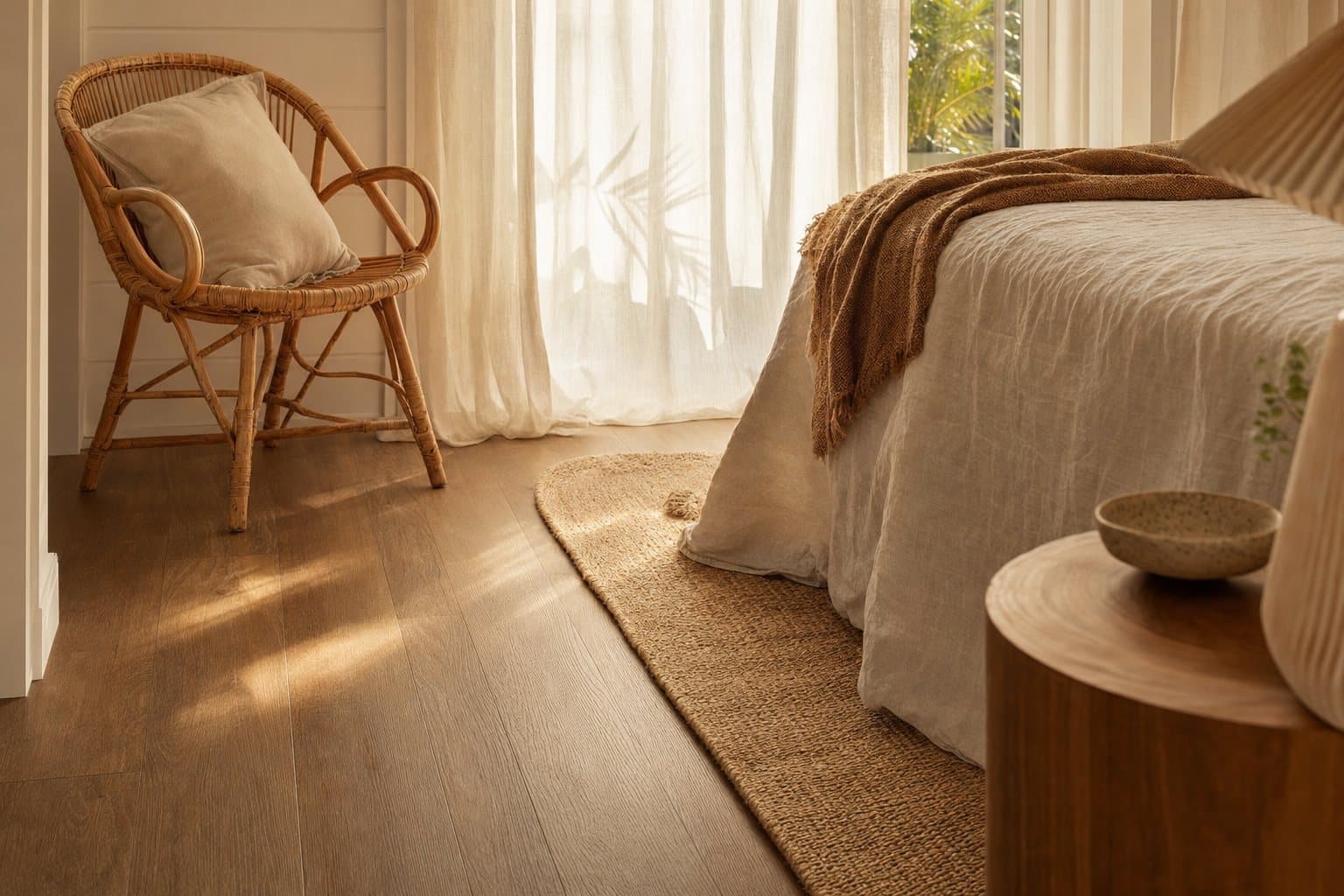
Third, sun. Queensland UV is fierce, and while quality vinyl decors resist fading well, years of hard afternoon sun through an uncovered west window will test any floor finish. Sheer curtains or blinds in the worst rooms, and the occasional rearranging of large rugs so the floor ages evenly, cost nothing and help.
Protection Beats Cleaning
The floors that still look new after a decade are not the ones that were mopped hardest. They are the ones with felt pads under every chair leg, a mat under the desk chair, and furniture lifted rather than dragged on moving day. Check the felt pads every few months, because a worn-through pad is a bare metal foot quietly grinding the same spot of your floor every dinner time.
That is the whole discipline. Keep grit off it, mop it gently with something neutral, never steam it, and pad the furniture. A vinyl floor cared for this way does not ask for anything else, which is a large part of why people choose vinyl in the first place. If yours is still at the choosing stage, our buying guide walks through thickness, wear layers and formats the same plain way.
Read enough? Hold the floor instead
No article settles a colour decision. Samples are 1 for $15, 2 for $20 or 3 for $25, redeemable against your flooring order, delivered to your door so you can judge the decor in your own light.