
Glue Down Vinyl Problems and How to Avoid Them
Glue-down vinyl is a stable, quiet, long-lived floor when it is done properly, and a source of lifting edges and hollow spots when it is not. The good news: nearly every failure has the same few causes, and all of them are preventable.
In this article
A glue-down vinyl floor that fails almost never fails because of the plank. It fails because of what happened, or did not happen, in the forty-eight hours before the plank met the adhesive. We sell glue-down vinyl to Brisbane homes every week, we think it is the best way to lay vinyl plank flooring, and precisely because of that we want to be straight about how these floors go wrong.
First, the case for glue-down, briefly. A glued plank is bonded to the subfloor across its whole back, so the floor is quiet, completely stable in big open rooms and hot sun-struck spaces, and easy to repair one plank at a time. There are no expansion trims interrupting doorways and no hollow drum sound underfoot. Done well, it is the most permanent-feeling vinyl floor you can have. Done poorly, it produces a specific and predictable set of problems.
The Problems, Named
Five failures account for nearly everything that goes wrong with glue-down vinyl plank.
| Problem | What you see | Usual cause |
|---|---|---|
| Lifting edges and corners | Plank ends curling or peeling away from the floor | Adhesive applied past its working time, dusty subfloor, or moisture underneath |
| Hollow spots and bubbles | Areas that click or flex underfoot, visible blisters | Air trapped at install, uneven adhesive spread, no rolling after laying |
| Gapping between planks | Fine gaps opening at joins months later | Planks laid cold or straight off the truck, then shrinking as they settle |
| Telegraphing | Ridges, trowel lines or old tile joints showing through the surface | Subfloor not levelled or old adhesive not removed before laying |
| Adhesive ooze | Glue squeezing up between joins, sticky residue on the surface | Too much adhesive, wrong trowel notch, planks slid rather than placed |
Read the right-hand column again and notice what is missing: the plank. Every one of those causes is preparation, timing or technique. That should make you optimistic, because all three are controllable.
Subfloor Prep Decides Everything
Vinyl plank flooring is thin and flexible, which is exactly what makes it comfortable and quiet, and also what makes it merciless about the surface below. Whatever texture the subfloor has, the vinyl will eventually show you. A proper prep means the slab or sheet floor is flat within fine tolerances, with high spots ground, low spots filled with levelling compound, old adhesive removed rather than glued over, and the whole thing swept and vacuumed until a wiped hand comes up clean.
Moisture matters just as much and shows up later. Fresh slabs need time to dry, and older slabs in low-set Brisbane homes can carry ground moisture year-round. A conscientious installer tests the slab rather than guessing, and uses a moisture barrier or the right primer where readings demand it. Adhesive laid over a damp slab is the classic cause of a floor that lets go months later, long after everyone has been paid.
The prep is invisible on handover day and completely visible three summers later. That is the frustrating economics of glue-down vinyl.
Acclimatisation Is Not Optional
Vinyl expands and contracts a little with temperature. Not much, but enough. Planks that travelled in a hot delivery truck, or sat overnight in a cold garage, are not at the size they will be once they live inside your air-conditioned home. Lay them straight away and they change dimension slightly after bonding: laid warm they shrink and gap, laid cold they expand and can push at edges.
The fix costs nothing except patience. Bring the cartons into the rooms where the floor will live, and let them sit for around a day or two at normal room temperature before laying, following whatever the specific product's instructions say. Flat, in the room, lids open where directed. Skipping this step to save a day is the cheapest possible way to buy a problem.
Adhesive, Trowels and Working Time
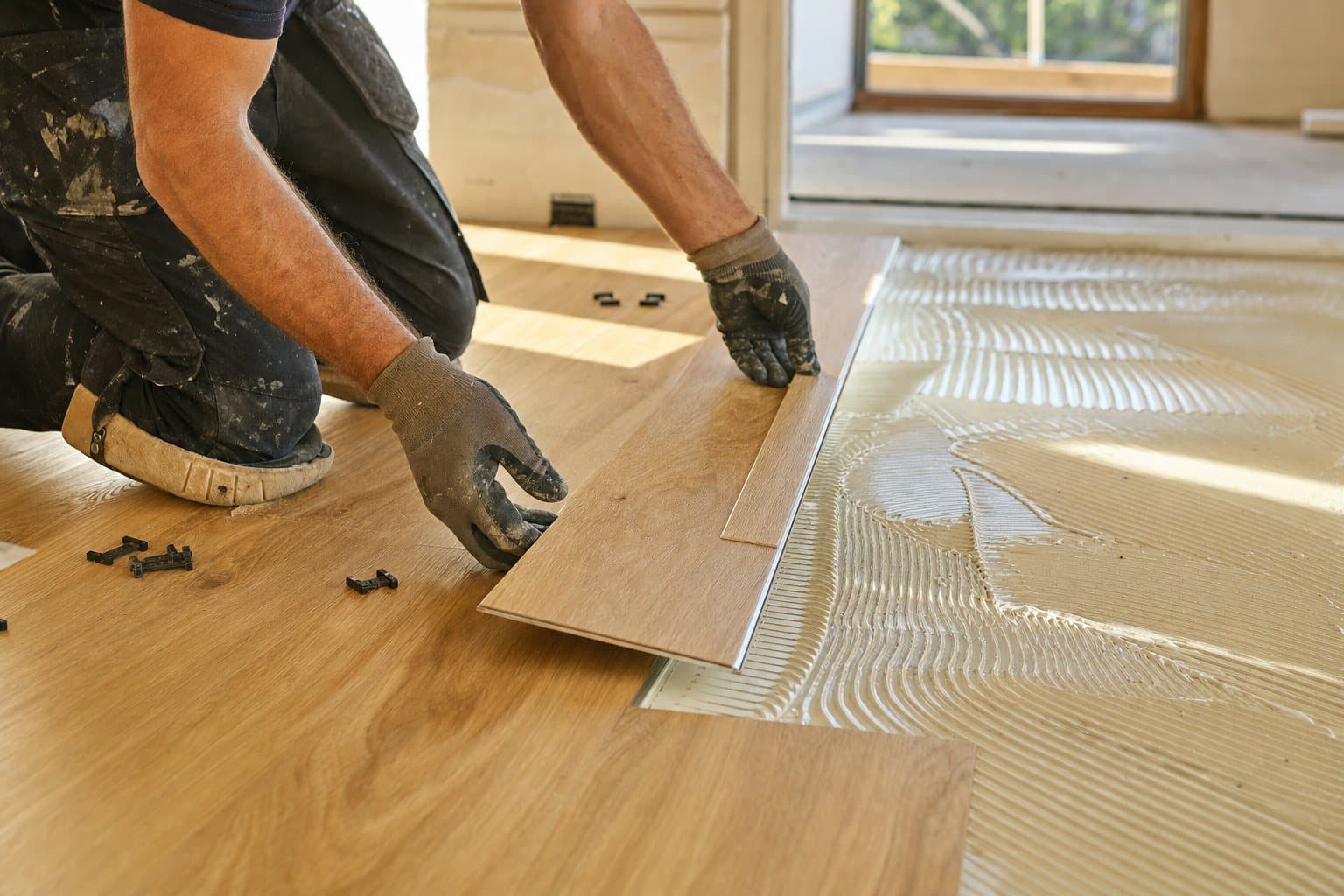
Vinyl adhesives are unforgiving about timing. Spread the glue, wait the specified flash time, lay into it during the working window, and roll the floor to seat every plank fully. Spread too far ahead and the adhesive skins over before planks arrive, giving those planks a weak grab that becomes a lifting corner. The trowel notch size matters too: too little adhesive starves the bond, too much oozes up between joins.
None of this is exotic knowledge. It is on the adhesive bucket. The failures happen when someone treats vinyl like an easier version of tiling, spreads half a room at once, and races the skin time. Which brings us to the real point.
Why Installer Choice Matters More Than Product Choice
Between two identical cartons of planks, the difference between a floor that lasts and a floor that lifts within a couple of summers is entirely the person laying it. When you interview installers, and you should treat it as an interview, a few questions separate the professionals quickly.
- How will you check the subfloor for flatness and moisture, and what will you do if it fails? A vague answer here is disqualifying.
- What adhesive will you use, and is it one the plank manufacturer accepts?
- Do you roll the floor after laying, and with what?
- How long will the planks acclimatise on site before laying?
- Can I see photos of glue-down vinyl jobs you have done, not just floating floors?
A good installer answers these happily, because the questions signal a client who values the part of the job nobody sees. A poor one gets defensive, and that is your answer too.
Getting It Laid Well
A failed floor gets blamed on the product first and the tradie second, so we would much rather your installer succeeds. Ask whoever you hire how they check subfloor moisture, which adhesive they use for the product you have bought, and whether they roll the floor after laying. Our installation guide goes deeper on finding and briefing a Brisbane installer.
If you are still deciding between glue-down and click, weigh the room, the subfloor and your appetite for prep work. And whichever way you go, get the planks into your hands first: adhesion, thickness and texture are easier to judge with a sample on your own slab than with any amount of reading.
Read enough? Hold the floor instead
No article settles a colour decision. Samples are 1 for $15, 2 for $20 or 3 for $25, redeemable against your flooring order, delivered to your door so you can judge the decor in your own light.